
We're coming to deliver. How to prepare for loading and unloading.
- Address and accessibility
- Being ready
- Times and waiting time
- Containers
- Safety
- On receipt
- Terms per mode of transport
- Checklist
A complete address and an accessible location
Give us the complete address
To plan your transport, we need the full details of the loading and unloading address. Always provide:
- Company name
- Full address
- Contact person on site
- Phone number
- Opening hours
- Loading and unloading times, if any
- Reference or booking numbers that are required
- Any details about access
Does the company have more than one entrance, or a separate entrance for goods traffic? Then make it clear where the driver should report.
Expect a large truck
For a standard delivery or collection, assume a tractor unit with a 13.60 metre trailer. The whole combination is even longer.
Whether the location is suitable and accessible is checked by the loading or unloading site itself. In advance. Look out for things like:
- Narrow streets and sharp bends
- Low passages, bridges or overpasses
- The maximum axle load or maximum total weight
- Low emission zones
- Restrictions on length, height or weight
- Barriers and access gates
- Enough room to turn
- A suitable surface
- A place to stand safely
- Local time windows for goods traffic
Is the location not or only partly accessible for a large truck? Always tell us before you book. Then we'll check whether a different vehicle is needed and possible. This may involve extra costs.
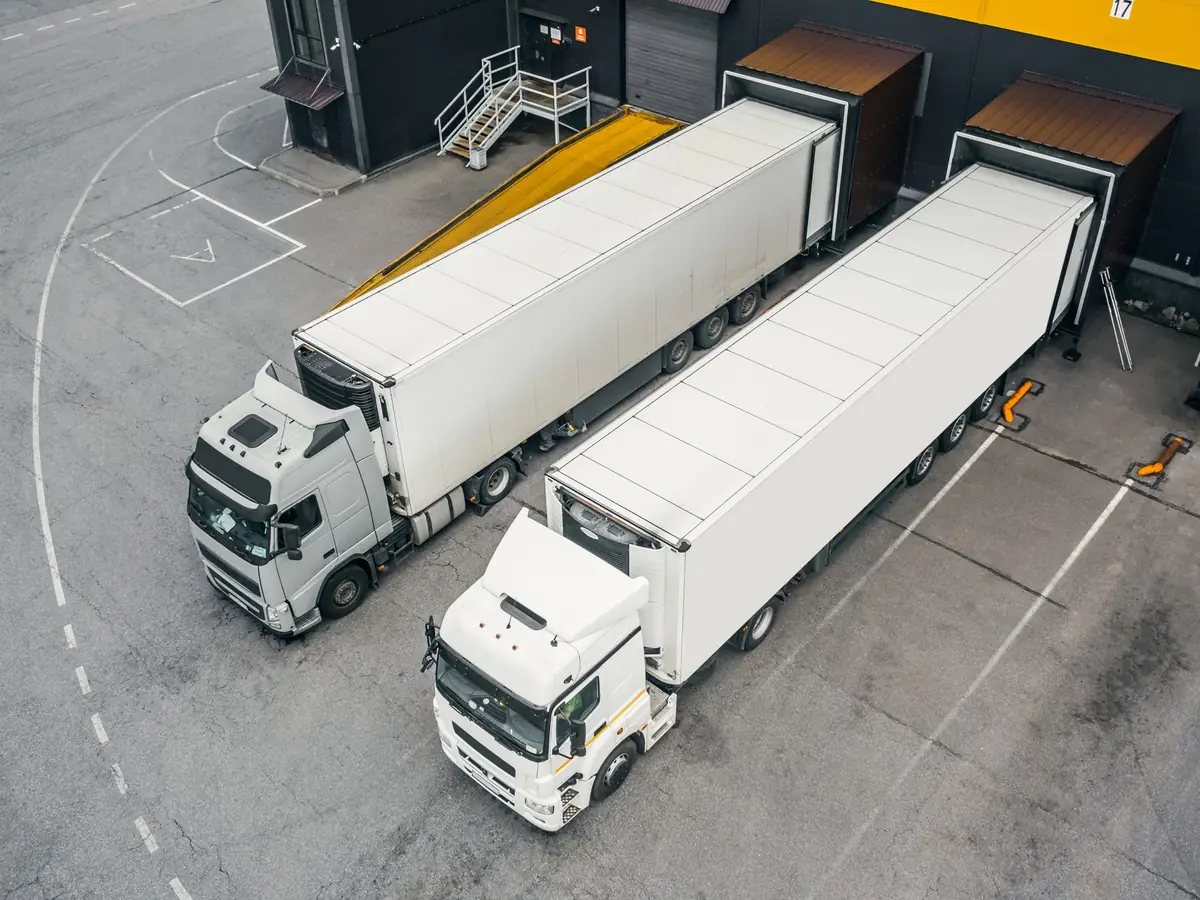
Everything ready when the driver arrives
Part loads and pallets
With a part load (LTL), the truck carries goods for several customers. So the driver often has several loading and unloading addresses on the same route. That's why your goods must be complete and ready at collection. Make sure that:
- the goods are ready
- they are packed fit for transport
- the pallets are built stable and safe
- the number of pallets or packages is correct
- the dimensions and weights match your booking
- the goods are accessible for loading
- the loading or unloading equipment is available
Does your shipment differ from what you booked? Tell us before the transport starts. An extra pallet or larger dimensions can mean there's not enough room in the truck.
The driver doesn't automatically load and unload
In principle, the driver is there for the transport. So don't assume the driver will load, unload or carry the goods inside. The loading or unloading site provides the people and the equipment:
- A loading dock
- A forklift
- A pallet truck
- Staff to load or unload
No dock or forklift, and do you need a tail lift, pallet truck or other equipment? Mention it when you book. Not every truck carries these as standard.
Give us the correct loading and unloading times
Always give the correct opening hours of the location. For example: Monday to Friday, from 08:00 to 12:00 and from 13:00 to 16:30. Also tell us whether:
- loading or unloading isn't possible during the lunch break
- a time slot must be reserved in advance
- the driver must register in advance
- a booking number is required
- special safety rules apply
- trucks aren't welcome on certain days or at certain times
The better we know this in advance, the better we can plan your transport.
No waiting time, no extra costs
A preferred delivery time is not a guarantee
With road transport, the arrival time depends on what happens on the way and at earlier addresses:
- Traffic jams
- Roadworks
- Traffic incidents
- Waiting times
- Earlier loading and unloading addresses
- The driver's driving and rest times
Does the truck really need to be there at a fixed time? Tell us before you book. Then we'll check whether a timed delivery is possible and whether extra costs apply.
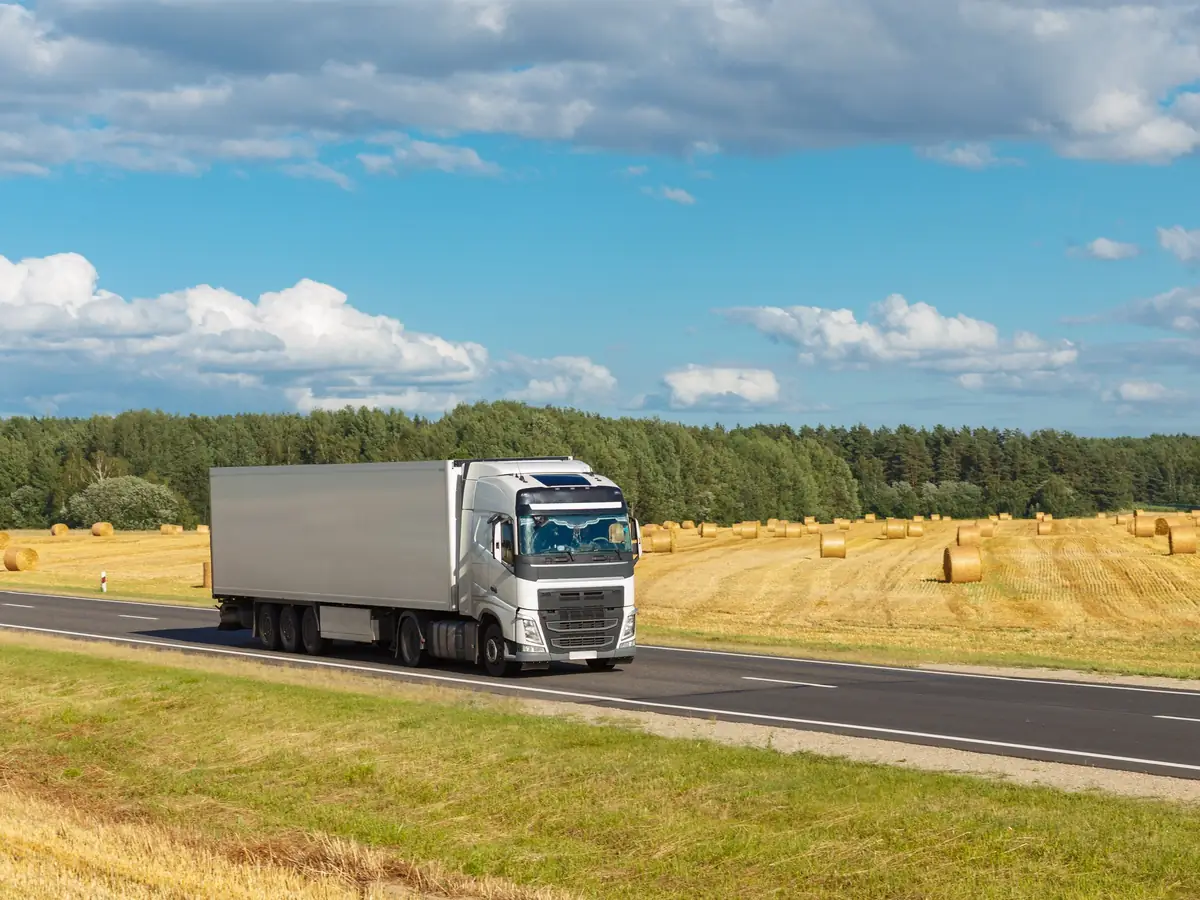
How to avoid waiting time
When the driver arrives, it should in principle be possible to load or unload straight away. Waiting time occurs when:
- the goods aren't ready yet
- the warehouse is closed
- there are no staff
- the dock is occupied
- the forklift isn't available
- the documents are missing
- the driver can't register
- a reference number is missing
- the location can't or won't accept the shipment
The carrier may charge for extra waiting time. Those costs are then passed on as extra transport costs. Is loading or unloading not possible at all? Then the truck may have to be rescheduled.
Is a container coming? Then watch out for this.
Loading or unloading a container involves a few extra points.
The container stays on the chassis
A container normally arrives on a truck with a container chassis. During loading or unloading, the container stays on it. So the floor is at truck height, and the location must be set up for that.
Do you want the container placed on the ground? Tell us in advance. That requires special equipment, and different rates and conditions apply.
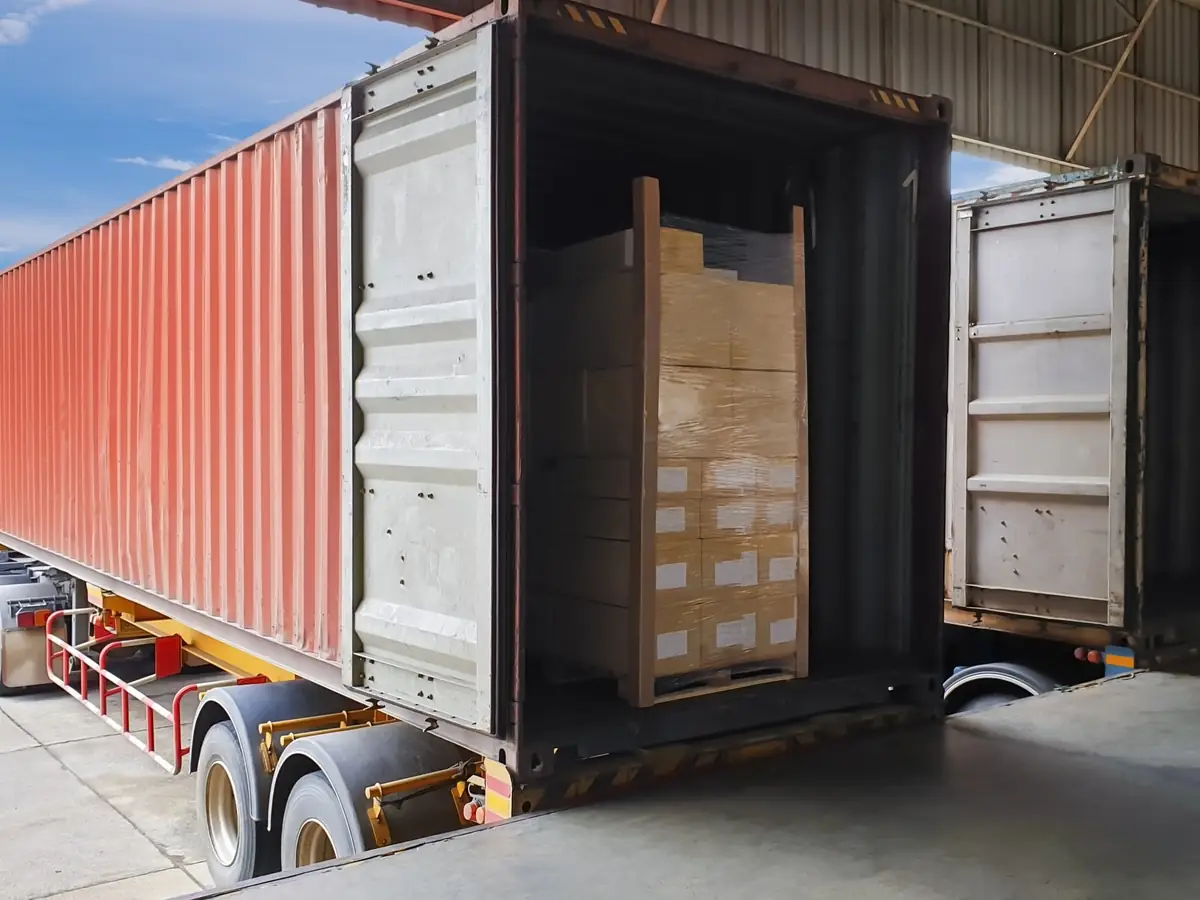
Enough room for the combination
A truck with a container needs a lot of room to manoeuvre safely. Check in advance whether:
- the combination can reach the site
- the access gate is wide and high enough
- there's enough room to turn
- the surface is suitable for heavy goods traffic
- the truck can stand safely during unloading
Not sure? Send us photos or more information about the location in advance. Then we'll discuss the situation with the carrier.
Enough time to unload
A container must be unloaded within the agreed time. Make sure that:
- staff are available
- the right equipment is there
- there's enough storage space
- the goods can come straight out of the container
- the unloading area is clear and accessible
Does unloading take longer than the free loading or unloading time? Then the carrier may charge extra waiting time. How much free time is included varies by carrier, transport and agreement.
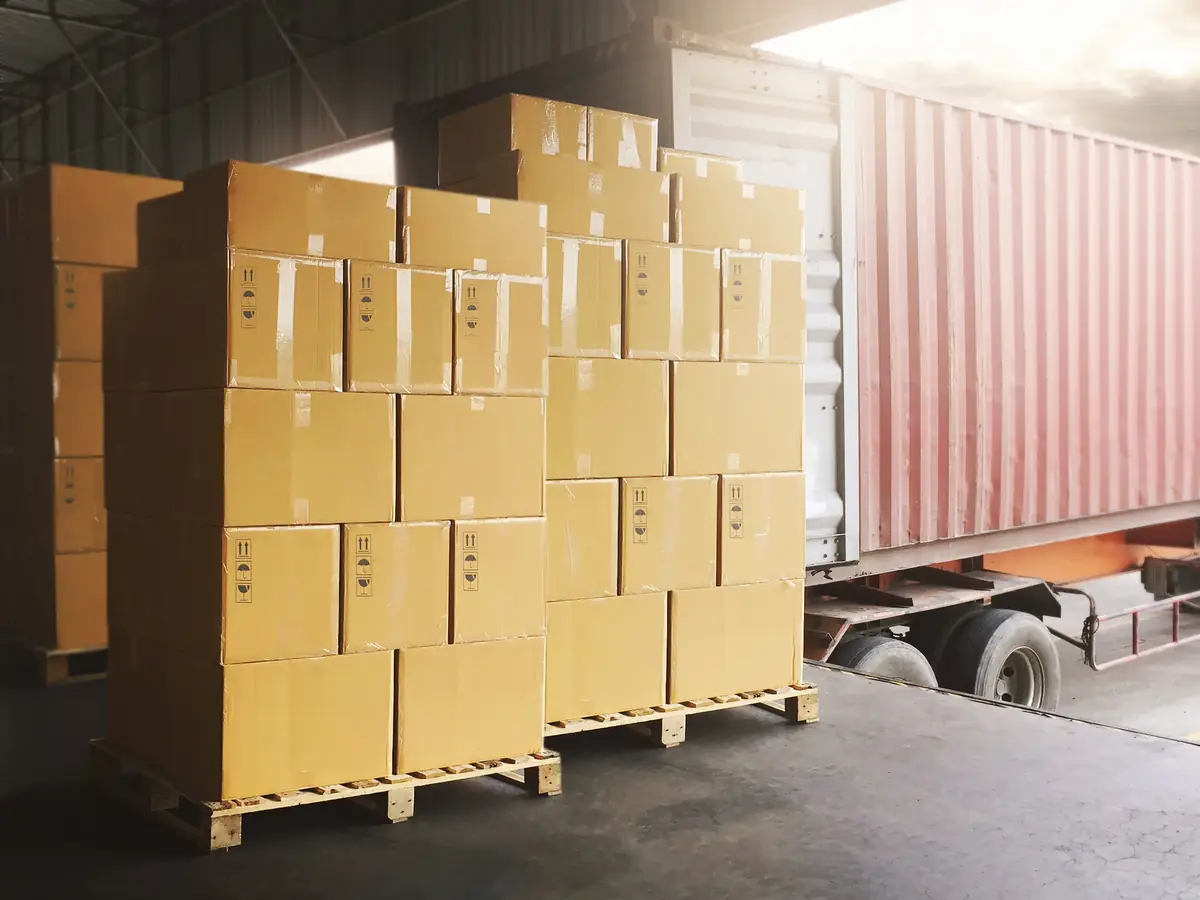
Safety first: gases in a container
A container may contain harmful or dangerous gases and vapours. These come from, for example:
- fumigation of goods against pests
- products that release substances during transit
- packaging material
- glue
- solvents
- paint or other chemicals
- substances that have built up during a long, sealed journey
The danger: you can't always see or smell them. Opening, entering or unloading a container straight away without suitable measures can be a risk to your health.
Explect can arrange a gas measurement for you
Do you want to have the container checked for harmful gases or vapours in advance? Let us know before the delivery.
The measurement may show that something needs to happen first before the container can be opened safely. Ventilating and measuring again, for example.
Unsure about safety?
Then don't simply open or enter the container. Have the situation assessed first. The recipient remains responsible for a safe working environment.
Check your goods before the driver leaves
Inspect your goods on receipt, as far as reasonably possible. Look out for:
- Visible damage
- Damaged pallets
- Wet packaging
- Open or damaged boxes
- Missing packages
- Anything else that's visibly different
Do you see damage, or is something missing? Write it immediately and clearly on the consignment note or CMR, before you sign. Take photos. Then contact us as soon as possible.
Report damage
Think about transport insurance in advance
Goods can be damaged, lost or stolen in transit. A carrier is not automatically liable for the full value of your goods. Compensation may be limited by the conditions of carriage and the rules that apply.
Want to cover that risk? Then Explect arranges transport insurance for your shipment. Let us know before the transport starts.
The terms per mode of transport
Each mode of transport has additional terms on times, costs and cancellation. Here they are at a glance.

Road transport
| Subject | Terms |
|---|---|
| Free loading and unloading time for FTL and LTL | 2 hours |
| Free loading and unloading time for groupage and part loads | Pro rata: 15 minutes for 1 to 8 pallets |
| Extra waiting time | € 85.00 per hour |
| Cancellation, more than 2 working days in advance | Explect may claim 80% of the original costs |
| Cancellation, less than 2 working days in advance, or dead freight | Explect may claim 100% of the original costs |
| Collection and delivery | On working days from 08:00 to 17:00, local time |
| Transit days | An indication. No rights can be derived from it. |
| Euro pallets | You exchange these with the carrier. Not exchanging? Then the pallets are charged at market price, pro rata. |
Sea freight, LCL
| Subject | Terms |
|---|---|
| Free loading and unloading time | 15 minutes, pro rata |
| Collection and delivery | On working days from 08:00 to 17:00. Without tail lift, side loader or truck-mounted forklift. |
| Accessibility | The location must be accessible for a 13.60 metre truck. If it isn't, Explect may charge extra costs. |
| Euro pallets | You exchange these with the carrier. Not exchanging? Then the pallets are charged. |
Sea freight, FCL
| Subject | Terms |
|---|---|
| Free loading and unloading time | 2 hours, of which a maximum of 1 hour at the terminal |
| Free loading and unloading time with a side loader | 1 hour |
| Collection and delivery | On working days from 08:00 to 17:00. Without side loader. |
Sea freight, LCL and FCL
| Subject | Terms |
|---|---|
| Extra waiting time | € 85.00 per hour |
| Cancellation, more than 3 working days in advance | 80% of the original costs may be claimed |
| Cancellation, less than 1 working day in advance, or dead freight | 100% of the original costs may be claimed |
| D&D (demurrage and detention) and warehouse costs | At the client's risk and expense |
| Gas measurements | In line with the labour inspectorate's regulations. The costs are for the client. Does Explect carry out the measurement? Then it costs € 205.00. |
| FYCOs | The costs are at the client's risk and expense |
| Transit days | An indication. No rights can be derived from it. |
Air freight
| Subject | Terms |
|---|---|
| Cancellation, more than 2 working days in advance | 80% of the original costs may be claimed |
| Cancellation, less than 2 working days in advance, or dead freight | 100% of the original costs may be claimed |
| Storage costs | After the free period, at the client's risk and expense |
| Collection and delivery | On working days from 08:00 to 17:00, local time |
| Transit days | An indication. No rights can be derived from it. |
| Euro pallets | You exchange these with the carrier. Not exchanging? Then the pallets are charged. |
Checklist for loading and unloading
 Checklist
- The loading and unloading addresses are complete and correct
- The contact person and phone number are known
- The opening hours have been provided
- Time slots have been arranged, if needed
- Reference numbers are ready, if needed
- The location is accessible for large goods vehicles
- There's enough room to manoeuvre
- The goods are ready at collection
- Quantities, weights and dimensions are correct
- A dock, forklift or other equipment is available
- A tail lift or other special equipment has been requested in advance, if needed
- Staff are available to load or unload
- For a container, loading or unloading can be done at truck height
- There's enough time and room to unload a container
- Safety and a gas measurement have been considered
- Restrictions on access or safety have been reported to Explect in advance