Frequently asked questions
Frequently asked questions about modes of transport
Sea freight
What is FCL?
FCL stands for Full Container Load. You hire a whole container (20ft, 40ft or 40ft HC) for your shipment. The container is loaded at the supplier and travels to its destination without being opened along the way.
What is LCL?
LCL stands for Less than Container Load. You share a container with other shippers. You pay based on the volume (CBM) and/or weight your shipment takes up.
When do I choose FCL and when LCL?
There is no universal number of CBM at which FCL is always cheaper. It depends on things like:
- The route and the sea freight rate at that moment
- Local charges in the countries of departure and arrival
- The weight of the cargo
- The delivery address and current market prices
- Always ask for both options so you can compare.
Why isn't a low CBM rate automatically cheap?
With LCL, on top of the freight rate per CBM there are also consolidation charges, document fees, warehouse and terminal charges, customs clearance and delivery. A low rate per CBM says little about the total landed cost.
What do ETD and ETA mean?
ETD (Estimated Time of Departure) is the expected departure date. ETA (Estimated Time of Arrival) is the expected arrival date. Both are estimates, not guarantees.
What is transhipment?
Transhipment means your container is moved from one ship to another along the way, often at an intermediate port. This is normal on many sea freight routes, but it can take extra time and increases the risk of delay.
What is a blank sailing?
A blank sailing means a shipping line cancels a scheduled departure. Your shipment then moves to the next available departure, which causes a delay.
What is demurrage?
Demurrage is the charge you pay when a container stays at the terminal too long after the ship has been unloaded. The free period is limited (often 3-7 days). After that, the costs rise quickly: sometimes tens of euros per day per container.
What is detention?
Detention is the charge you pay when you keep a container too long after collecting it from the terminal. The empty container must be returned within the agreed period. These costs also rise quickly.
Rail transport
Is rail transport from China possible?
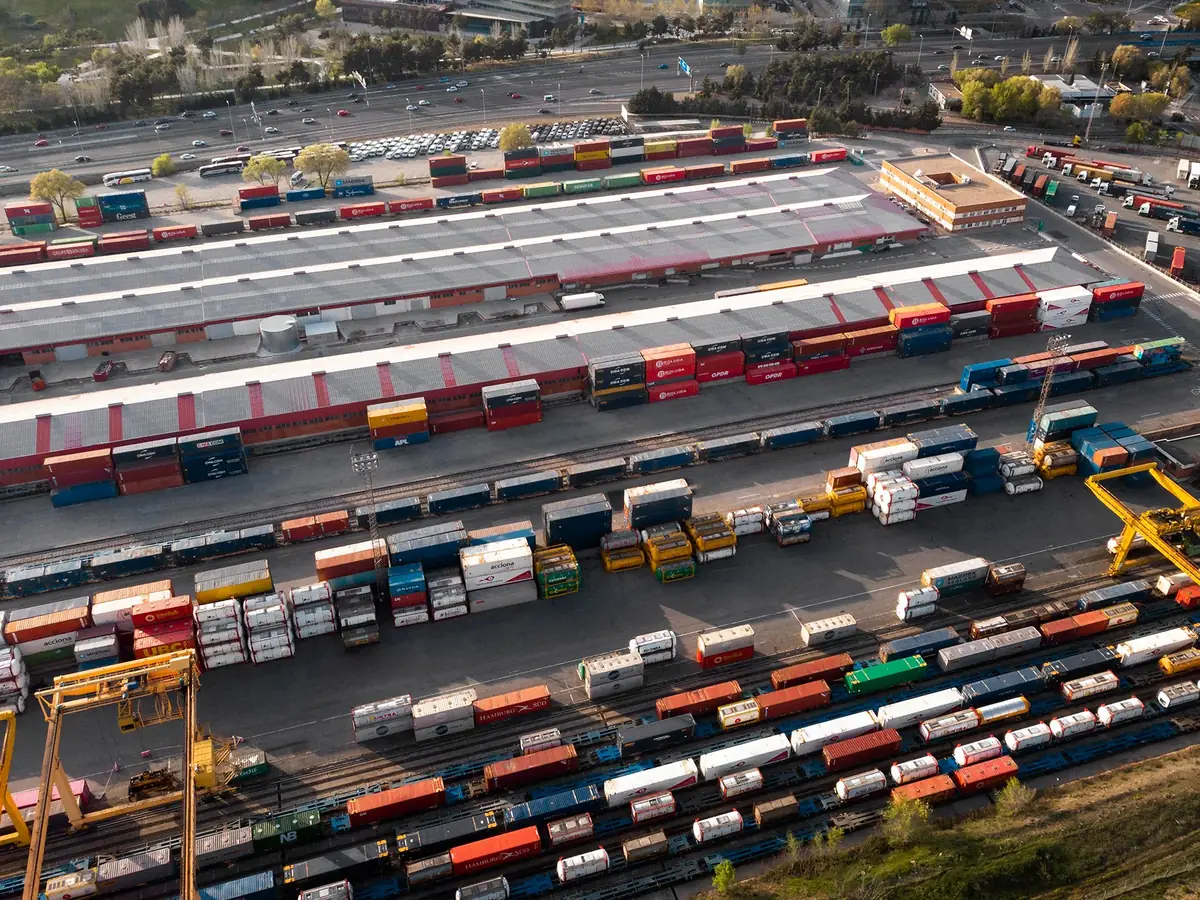
Yes. Freight trains run regularly between China and Europe via the "New Silk Road".
Is rail always faster than sea freight?
Usually, yes: the transit time by rail is typically 24 to 30 days, compared with 36 to 60 days by sea. But delays from border crossings, changes in track gauge and geopolitical factors can extend the lead time.
Is rail transport cheaper than air freight?
Usually, but not by definition. It depends on the volume, the weight, the route and current rates. In terms of cost, rail generally sits between sea and air freight.
Air freight
How is air freight calculated?
Air freight is calculated on the basis of the chargeable weight: the higher of the actual weight or the volumetric weight. You calculate the volumetric weight by dividing length × width × height (in cm) by 6,000.
Can I send lithium batteries by air freight?
You can, but strict rules apply. Whether and how batteries are allowed depends on:
- The type of battery (lithium-ion or lithium-metal)
- Whether the battery is inside, packed with or separate from the device
- The capacity (Wh) of the battery
- The packaging and labelling requirements
- An airline always has the right to refuse goods containing batteries, even if you meet all the rules.
Can an airline refuse my goods?
Yes. Airlines have the right to refuse goods, for example in the case of dangerous goods, inadequate packaging, incorrect documentation, or if the cargo doesn't meet their own acceptance policy.
When is air freight the best choice?
Air freight is suitable for time-critical, high-value or small shipments where speed matters more than cost. Think of samples, spare parts, seasonal goods or urgent repeat orders.
What is the difference between standard and express air freight?
With standard air freight, your shipment is combined with other cargo and goes on the next available flight. Express air freight is a faster service with priority and often a guaranteed lead time, but at a higher rate.
Are there weight or size restrictions for air freight?
Yes. Every airline has its own limits on the maximum weight per package and maximum dimensions. Very heavy or large items can only be carried on special freighter aircraft or with charter solutions.